
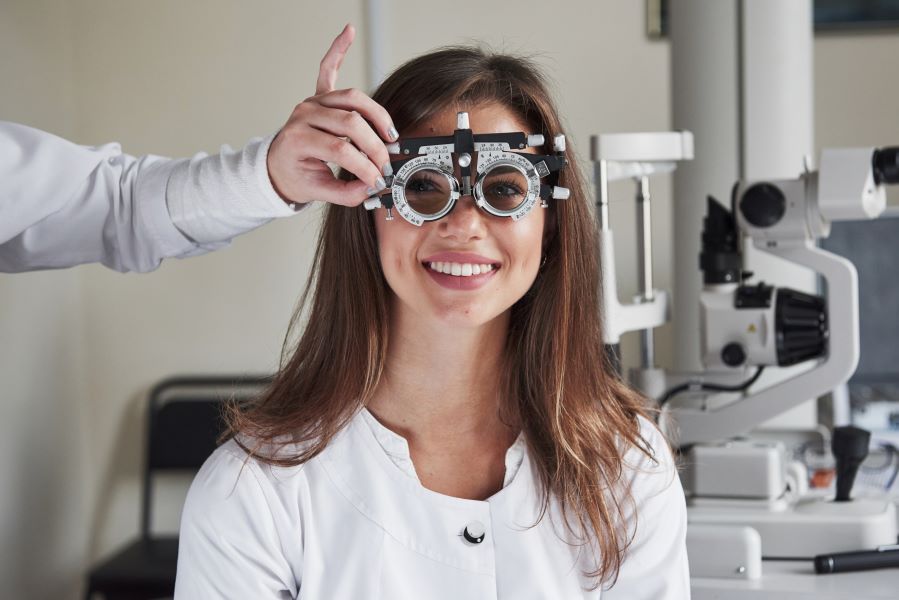
A strong optometry CV should show more than your ability to perform eye examinations. It should demonstrate how you diagnose visual and ocular conditions, manage patients, use diagnostic technology, collaborate with healthcare professionals, and support positive clinical outcomes. Whether you are a newly qualified optometrist, an experienced clinician, or a practice leader, your CV must present your qualifications clearly and align with the target position. This guide explains how to structure an optometry CV, which skills and keywords to include, and how to write achievement-focused experience.
What Is an Optometry CV?
An optometry CV summarizes your:
- Clinical experience
- Education
- Licensure and certifications
- Diagnostic skills
- Patient-care abilities
- Professional achievements
- Research or teaching experience
Private practices and healthcare employers may use the terms CV and resume interchangeably. Academic, research, and teaching roles may require a longer curriculum vitae that includes publications, presentations, research, and professional affiliations. Always review the job posting to determine the expected format.
What Employers Look for in an Optometrist
Employers want optometrists who provide accurate clinical care while creating a positive patient experience.
Important areas may include:
- Comprehensive eye examinations
- Refraction and vision assessment
- Ocular disease diagnosis
- Contact lens fitting
- Glaucoma management
- Diabetic eye care
- Dry-eye treatment
- Pediatric or geriatric optometry
- Low-vision services
- Preoperative and postoperative care
- Electronic health records
- Patient education
- Practice growth
Your optometry CV should show how you applied these skills rather than presenting them as an unsupported list.
Recommended Optometry CV Format
Use a clean, professional layout with these sections:
- Contact information
- Professional title
- Professional summary
- Core clinical competencies
- Licenses and certifications
- Professional experience
- Education
- Professional affiliations
- Research or presentations
New graduates may place education and clinical rotations above professional experience. Experienced optometrists should lead with clinical achievements, patient volume, specialties, and leadership experience.
How to Write an Optometrist Summary
Your professional summary should be three to five concise lines.
Include your:
- Years of experience
- Clinical specialties
- Patient populations
- Diagnostic technology
- Leadership experience
- Strongest professional qualities
Experienced Optometrist Summary
Patient-focused optometrist with eight years of experience providing comprehensive vision care to pediatric, adult, and geriatric patients. Proven record in diagnosing and managing refractive conditions, glaucoma, diabetic retinopathy, dry-eye disease, and other ocular disorders. Experienced in specialty contact lens fitting, retinal imaging, patient education, and interdisciplinary care.
New Graduate Summary
Newly qualified Doctor of Optometry with clinical training in primary eye care, ocular disease, contact lens fitting, pediatric optometry, and low-vision services. Experienced in conducting comprehensive examinations, interpreting diagnostic findings, and educating patients on treatment and preventive eye care.
Best Skills for an Optometry CV
Include skills that match your experience and the job description.
Clinical Skills
- Comprehensive eye examinations
- Refraction
- Visual acuity assessment
- Slit-lamp biomicroscopy
- Tonometry
- Visual field testing
- Retinal imaging
- Optical coherence tomography
- Corneal topography
- Pediatric vision assessment
Treatment and Disease Management
- Glaucoma management
- Diabetic retinopathy screening
- Dry-eye management
- Macular degeneration monitoring
- Cataract evaluation
- Myopia control
- Low-vision care
- Preoperative and postoperative care
Contact Lens Skills
- Soft contact lens fitting
- Rigid gas-permeable lenses
- Scleral lenses
- Multifocal lenses
- Specialty lens fitting
- Keratoconus management
- Contact lens education
Professional Skills
- Patient communication
- Clinical documentation
- Treatment planning
- Interdisciplinary collaboration
- Staff supervision
- Practice management
- Regulatory compliance
- Quality improvement
Optometry CV Keywords
Applicant tracking systems may search for terms such as:
- Optometry
- Comprehensive eye examinations
- Ocular disease
- Refraction
- Contact lens fitting
- Glaucoma
- Diabetic retinopathy
- Dry-eye disease
- Retinal imaging
- Visual field testing
- Patient education
- Treatment planning
- Electronic health records
- Pediatric optometry
- Practice management
Use relevant keywords naturally throughout your summary, skills, and work-experience sections. Do not add terms that do not accurately reflect your qualifications.
How to Write Optometrist Work Experience
Each position should include:
- Employer
- Location
- Job title
- Employment dates
- Achievement-focused bullets
Avoid listing only routine responsibilities.
Weak Example
Responsible for examining patients and prescribing glasses.
Stronger Example
Conducted 25 to 30 comprehensive eye examinations daily, diagnosing refractive errors and ocular conditions while prescribing individualized eyeglass, contact lens, and treatment solutions.
The stronger example communicates patient volume, clinical responsibility, and scope.
How to Present Optometry Achievements
Use measurable results whenever possible.
Examples include:
- Increased patient satisfaction from 88% to 96%.
- Reduced average appointment delays by 20 minutes.
- Increased annual contact lens revenue by 24%.
- Expanded the active patient base by 15%.
- Maintained a 95% patient-retention rate.
Use accurate numbers that you can explain during an interview.
Education Example
List your Doctor of Optometry degree prominently.
Doctor of Optometry
Illinois College of Optometry, Chicago, IL
May 2026
Bachelor of Science in Biology
University of Illinois, Urbana-Champaign, IL
May 2022
New graduates may also include clinical rotations, academic honors, research, leadership positions, and a strong GPA.
Experienced optometrists can keep the section brief.
Licenses and Certifications
Make your professional credentials easy to find.
Include:
- State optometry license
- National board certification
- Therapeutic pharmaceutical certification
- Basic Life Support
- Specialty credentials
- Controlled-substance registration when relevant
Example
Licenses and Certifications
- Licensed Optometrist, State of Georgia
- National Board of Examiners in Optometry
- Therapeutic Pharmaceutical Agents Certification
- Basic Life Support, American Heart Association
Confirm that all information is current before applying.
Professional Affiliations
Relevant organizations may include:
- American Optometric Association
- State optometric associations
- American Academy of Optometry
- College of Optometrists in Vision Development
- Local healthcare networks
Include leadership positions or committee work when relevant.
Research and Presentations
Academic or research-focused optometry CVs may include:
- Peer-reviewed publications
- Clinical research
- Poster presentations
- Conference presentations
- Teaching experience
- Professional workshops
Example
Presentation
“Improving Dry-Eye Outcomes Through Individualized Treatment Planning”
Georgia Optometric Association Annual Conference, 2025
Common Optometry CV Mistakes
Avoid:
- Using a generic professional summary
- Listing duties without results
- Omitting licensure
- Failing to quantify experience
- Using too much technical jargon
- Ignoring patient-care skills
- Sending the same CV for every position
- Including unnecessary personal information
- Using complicated or ATS-unfriendly formatting
Optometry CV Formatting Tips
Use:
- A professional font
- 10- to 12-point body text
- Clear section headings
- Consistent employment dates
- Short accomplishment bullets
- Adequate white space
- One to two pages for most private-sector roles
Academic and research roles may require a longer CV.
Save the document as a PDF unless the employer requests another format. Use a professional filename such as:
Jordan-Taylor-Optometrist-CV.pdf
Frequently Asked Questions
- What should an optometry CV include? Include contact information, a professional summary, clinical skills, licenses, certifications, work experience, education, and relevant affiliations.
- How long should an optometry CV be? Most private-practice applications can use one or two pages. Academic, research, and teaching positions may require a longer CV.
- What skills should an optometrist list? Include eye examinations, refraction, ocular disease management, contact lens fitting, diagnostic testing, patient education, and clinical documentation.
- How should a new graduate write an optometry CV? Emphasize education, clinical rotations, diagnostic skills, patient populations, and supervised clinical experience.
- What is the difference between an optometry CV and a resume? A private-sector resume is usually concise and targeted. An academic CV may include detailed research, publications, presentations, teaching, and professional activities.
- How can I make my optometry CV ATS-friendly? Use standard headings, simple formatting, relevant keywords, clear dates, and text-based content rather than graphics or skill bars.
Final Thoughts
An effective optometry CV combines clinical expertise with evidence of patient care, communication, and measurable impact.
Your CV should clearly show:
- The patients and conditions you have treated
- The examinations and technologies you use
- Your approach to diagnosis and treatment
- Your patient communication skills
- Your contribution to clinical quality or practice growth
- Your licenses and certifications
Replace generic responsibilities with specific examples wherever possible. A targeted CV helps employers understand how you can contribute to their patients and practice.
Build a Stronger Optometry CV With BoxResume
BoxResume helps optometrists and other healthcare professionals create ATS-friendly career documents that communicate clinical expertise and professional value.
Our professional resume writers can help you:
- Present clinical experience clearly
- Highlight patient-care achievements
- Add relevant optometry keywords
- Organize licenses and certifications
- Strengthen your professional summary
- Quantify clinical results
- Tailor your CV to a specific position
- Write a matching cover letter
- Optimize your LinkedIn profile
Get a professional Optometry resume review and ensure your optometry experience is presented clearly, accurately, and competitively.
