
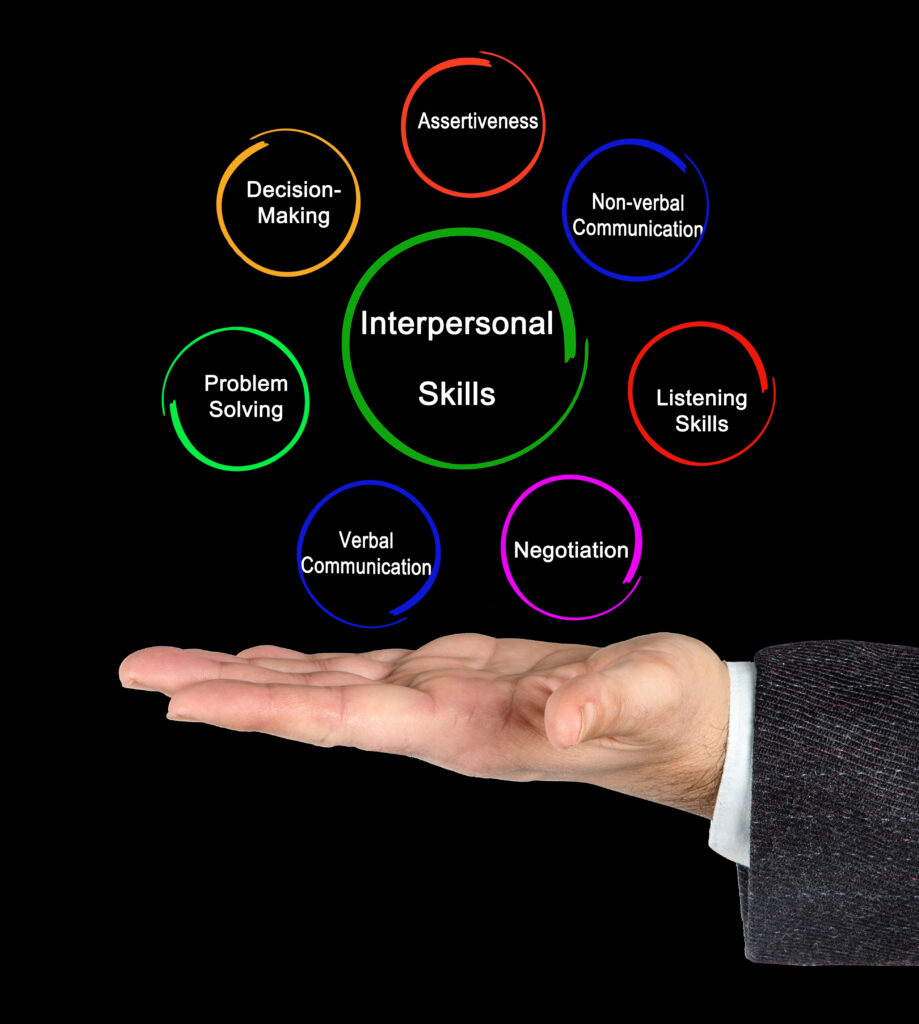
Technical qualifications may help you meet the minimum requirements for a job. Still, your ability to communicate, collaborate, listen, resolve conflict, and build trust often determines how effectively you perform the job. The right interpersonal skills for resume show employers how you work with colleagues, customers, managers, patients, suppliers, and other stakeholders.
A strong resume should avoid unsupported claims such as “excellent communicator” or “team player.” Instead, it should demonstrate how your interpersonal abilities improved service, strengthened relationships, supported teamwork, or produced a measurable result.
This guide explains which interpersonal skills employers value, how they differ from other soft skills, where to place them, and how to demonstrate them with achievement-focused examples.
Key Takeaways
- Match your interpersonal strengths to the job description.
- Prioritize evidence over unsupported adjectives.
- Show communication and relationship skills in your experience bullets.
- Combine interpersonal strengths with technical qualifications.
- Use measurable outcomes whenever possible.
- Avoid vague phrases such as “people person.”
- Tailor your examples to the role and industry.
- Make sure every claim can be explained in an interview.
Choose a focused set of interpersonal skills for resume sections rather than copying a long, generic list. Then prove the most important ones in your summary and professional experience.
What Are Interpersonal Skills?
Interpersonal skills are the abilities you use to communicate, collaborate, influence, support, and build relationships with others.
You use them when you:
- Explain information
- Listen to concerns
- Work with a team
- Resolve disagreements
- Negotiate an outcome
- Support a customer
- Coach an employee
- Present to leaders
- Coordinate with suppliers
- Build trust with clients
These skills are transferable. A professional who builds strong customer relationships in hospitality can apply them in retail, healthcare, financial services, or account management.
Interpersonal Skills Vs Soft Skills
Interpersonal skills focus on how you interact with other people while soft skills include broader personal and behavioral qualities.
| Interpersonal Skills | Soft Skills |
| Active listening | Time management |
| Collaboration | Adaptability |
| Empathy | Initiative |
| Negotiation | Creativity |
| Conflict resolution | Resilience |
| Relationship building | Attention to detail |
A strong resume often needs both. Adaptability may help you adjust to change, while communication and collaboration help you guide others through it.
Why Interpersonal Skills Matter to Employers
Almost every job involves interacting with someone. Even highly technical or independent positions usually require communication with managers, teammates, customers, or stakeholders.
Strong interpersonal abilities can improve:
- Team performance
- Customer satisfaction
- Employee engagement
- Project delivery
- Workplace culture
- Conflict management
- Sales results
- Patient experience
- Knowledge sharing
- Leadership effectiveness
The strongest interpersonal skills for resume connect a behavior to a useful outcome.
How to Choose the Right Interpersonal Skills
Use this process to identify the most effective interpersonal skills for resume targeting.
Read the Job Description
Highlight phrases such as:
- Collaborate with cross-functional teams
- Communicate with senior leaders
- Build customer relationships
- Resolve conflicts
- Negotiate contracts
- Coach team members
- Present recommendations
- Work with diverse stakeholders
Identify Repeated Themes
Repeated communication or relationship requirements usually indicate an important skill.
Match Each Skill to Evidence
For every skill, ask:
- When did I use it?
- Who was involved?
- What challenge did I address?
- What result did I produce?
- Can I explain the example in an interview?
Prioritize the Most Relevant Skills
Select a focused group rather than listing all positive traits.
Use Employer Terminology Naturally
When the employer asks for “stakeholder communication,” use that phrase if it accurately reflects your experience.
Where to Put Interpersonal Skills on Your Resume
The best interpersonal skills for resume content appear in several sections, not just in a skills list.
- Professional Summary – include one or two relationship-focused strengths when they are central to the role. For Instance Customer success manager with seven years of experience in account retention, onboarding, relationship development, and conflict resolution. Maintained 94% retention across a $4 million portfolio.
- Skills Section – use concise, job-relevant terms.Keep this section focused. Technical and job-specific skills may deserve more space.
- Professional Experience – this is the strongest place to demonstrate interpersonal abilities. For instance facilitated weekly meetings among product, sales, and support teams, reducing unresolved customer issues by 27%.
- Projects – students and career changers can demonstrate collaboration, presentation, leadership, and stakeholder management through academic, volunteer, or independent projects.
- Education – recent graduates can mention group projects, presentations, student leadership, or mentoring when relevant.
- Volunteer Experience –volunteer roles can demonstrate community engagement, teamwork, coaching, fundraising, and relationship-building.
How to Prove Interpersonal Skills
Use this formula: Action + relationship or communication behavior + context + result
- Communication – presented financial findings to nontechnical managers, helping secure approval for a cost-reduction plan worth $320,000.
- Collaboration – partnered with marketing and sales to launch a campaign that generated 600 qualified leads.
- Leadership – coached six underperforming representatives, helping five reach quota within one quarter.
- Conflict Resolution – mediated scheduling disagreements across two departments and introduced a shared planning process.
- Relationship Building – developed relationships with strategic clients and increased annual renewal revenue by 16%.
These examples turn interpersonal skills from resume claims into credible evidence.
20 Key Interpersonal Skills to Include in Your Resume
Select the abilities that match your target role and your real experience.
1. Verbal Communication
Verbal communication is your ability to convey information clearly in conversations, meetings, calls, presentations, and interviews.
Resume Examples
- Presented monthly operational results to 15 senior leaders and secured approval for a process-improvement plan.
- Explained technical issues to nontechnical customers, improving first-contact resolution to 91%.
- Led daily team briefings that reduced missed priorities and duplicated work.
2. Written Communication
Written communication includes emails, reports, proposals, documentation, policies, and correspondence with customers.
Resume Examples
- Prepared executive reports used to guide quarterly budget and staffing decisions.
- Created troubleshooting guides that reduced repeat support requests by 24%.
- Wrote customer communications for a service change affecting more than 20,000 users.
3. Active Listening
Active listening means understanding what another person is communicating rather than merely waiting to respond.
It is especially important in:
- Customer service
- Healthcare
- Counseling
- Sales
- Management
- Human resources
- Consulting
Resume Examples
- Used active listening to identify customer needs and recommend solutions that increased account expansion revenue by 18%.
- Gathered employee feedback during one-to-one meetings and introduced scheduling changes that improved satisfaction.
- Clarified patient concerns and escalated urgent symptoms according to clinical procedures.
4. Teamwork
Teamwork means contributing to shared goals, supporting colleagues, and reliably fulfilling your responsibilities.
Resume Examples
- Collaborated with a six-person project team to complete a software migration two weeks ahead of schedule.
- Supported nursing, pharmacy, and case-management teams in coordinating safe patient discharge.
- Partnered with warehouse and transportation teams to improve on-time delivery from 89% to 97%.
5. Cross-Functional Collaboration
Cross-functional collaboration involves working with people from different departments or professional backgrounds.
Resume Examples
- Coordinated finance, sales, and operations stakeholders during the launch of a new pricing model.
- Worked with designers, developers, and product managers to release four major product features.
- Partnered with human resources and department leaders to redesign onboarding for 300 employees.
6. Relationship Building
Relationship building is your ability to build trust and maintain productive professional connections.
Resume Examples
- Built long-term relationships with key clients and retained 96% of a $4.2 million account portfolio.
- Developed partnerships with 12 community organizations to expand program participation.
- Strengthened supplier relationships and negotiated improved delivery terms.
7. Empathy
Empathy is the ability to understand another person’s perspective, needs, or concerns.
It is especially valuable in healthcare, customer service, education, social services, and management.
Resume Examples
- Supported patients and families through difficult care discussions using clear and compassionate communication.
- Adapted coaching plans to individual employee needs, helping six team members improve performance.
- Resolved sensitive customer complaints while preserving trust and loyalty.
8. Emotional Intelligence
Emotional intelligence comprises self-awareness, emotional regulation, social awareness, and relationship management.
Resume Examples
- Maintained calm communication during high-pressure incidents and coordinated effective team responses.
- Used employee feedback and performance data to address morale concerns before they affected retention.
- Adapted leadership style across experienced and early-career team members.
9. Conflict Resolution
Conflict resolution is the ability to identify disagreements, listen to different perspectives, and guide people toward a practical solution.
Resume Examples
- Mediated recurring scheduling conflicts between two departments and reduced missed handoffs.
- De-escalated complex customer complaints and retained 88% of high-risk accounts.
- Facilitated a team discussion that established clear ownership and improved project delivery.
10. Negotiation
Negotiation involves reaching an agreement while balancing competing priorities.
Resume Examples
- Negotiated supplier contracts that reduced annual procurement costs by $240,000.
- Secured favorable renewal terms across a portfolio of 30 strategic accounts.
- Reached agreement with project stakeholders on scope changes without delaying launch.
11. Persuasion
Persuasion is the ability to present an argument or recommendation in a convincing manner.
Resume Examples
- Presented a data-backed business case that secured $900,000 in funding.
- Used consultative selling techniques to exceed annual quota by 27%.
- Persuaded leadership to adopt a new quality-control process that reduced errors by 19%.
12. Customer Service
Customer service combines listening, empathy, communication, problem-solving, and follow-through.
Resume Examples
- Resolved an average of 50 customer cases per day while maintaining a 96% satisfaction score.
- Introduced proactive follow-up for complex cases and reduced repeat contacts by 21%.
- Trained 14 representatives on service-recovery techniques and escalation procedures.
13. Stakeholder Management
Stakeholder management is the ability to identify, communicate with, and align the people affected by a project or decision.
Resume Examples
- Managed communication with 40 stakeholders during a $2.1 million system implementation.
- Created weekly project updates that improved decision speed and issue resolution.
- Balanced customer, regulatory, and operational priorities during a product launch.
14. Coaching
Coaching helps others improve their performance through feedback, guidance, and support.
Resume Examples
- Coached eight sales representatives and improved average quota attainment from 82% to 105%.
- Delivered weekly performance sessions that reduced quality errors by 17%.
- Supported new managers in developing delegation and feedback skills.
15. Mentoring
Mentoring is a long-term developmental relationship focused on knowledge, confidence, and career growth.
Resume Examples
- Mentored six new analysts and shortened their average time to independent case ownership.
- Supported junior nurses through clinical orientation and competency development.
- Guided interns through research, presentation, and stakeholder-engagement assignments.
16. Knowledge Sharing
Knowledge sharing helps teams operate more efficiently and reduces reliance on individual employees.
Resume Examples
- Built a searchable knowledge base containing 120 technical support articles.
- Facilitated monthly learning sessions for a 25-person finance team.
- Documented standard procedures that reduced onboarding time by 30%.
17. Networking
Networking involves building mutually valuable professional relationships.
Resume Examples
- Developed a referral network that generated 35% of annual consulting leads.
- Built relationships with industry associations and secured five speaking opportunities.
- Expanded community partnerships to increase volunteer participation by 42%.
18. Cultural Awareness
Cultural awareness helps you communicate and work respectfully with people from diverse backgrounds.
Resume Examples
- Coordinated project communication across teams in six countries and three time zones.
- Adapted training materials for multilingual and culturally diverse audiences.
- Supported inclusive customer experiences across a global account portfolio.
19. Diplomacy
Diplomacy is the ability to handle sensitive issues without damaging trust or professional relationships.
Resume Examples
- Managed confidential employee-relations concerns and supported fair, timely resolutions.
- Communicated difficult project changes to clients while preserving long-term relationships.
- Balanced competing executive priorities and maintained alignment on deadlines.
20. Assertiveness
Assertiveness means communicating your position clearly and respectfully without being passive or aggressive.
Resume Examples
- Escalated a critical compliance risk and secured immediate corrective action.
- Clarified project scope and prevented additional work from delaying delivery.
- Communicated staffing constraints and helped leadership reprioritize deadlines.
ATS Optimization for Interpersonal Skills
Applicant tracking systems search for terms such as:
- Communication
- Collaboration
- Stakeholder management
- Negotiation
- Conflict resolution
- Customer service
- Team leadership
- Relationship management
Use these practices:
- Match the language of the job description when accurate.
- Include important terms in the skills section.
- Show the same abilities in context within your experience.
- Avoid repeating keywords unnaturally.
- Use standard section headings.
- Do not hide keywords.
- Keep the layout simple and readable.
- Make sure every listed skill is supported by evidence.
A strong ATS strategy balances keyword relevance with persuasive writing for human readers.
Common Mistakes to Avoid
- Listing Too Many Interpersonal Skills – a long list can make your strongest qualifications difficult to identify.
- Using Vague Claims – words such as “friendly,” “outgoing,” and “people person” provide little evidence.
- Repeating the Same Skills – do not use “communication” in every section without showing different examples.
- Ignoring Technical Skills – interpersonal strengths should support, not replace, the qualifications required to perform the job.
- Claiming Skills You Cannot Defend – an interviewer may ask for a specific example of negotiation, leadership, or conflict resolution.
- Using One Resume for Every Job – different positions require different relationship and communication abilities.
- Confusing Agreeableness With Effectiveness – strong interpersonal skills do not mean avoiding disagreement. They include communicating concerns, setting boundaries, and resolving issues constructively.
How to Improve Your Interpersonal Skills
- Ask for Feedback – request specific feedback from managers, coworkers, customers, or mentors.
- Practice Active Listening – focus on understanding before responding. Summarize what you heard and ask clarifying questions.
- Take on Collaborative Work – join cross-functional projects, committees, or volunteer initiatives.
- Improve Your Written Communication – practice writing clear, concise emails, reports, and meeting summaries.
- Learn Conflict-Resolution Techniques – study de-escalation, mediation, and negotiation frameworks.
- Mentor or Coach Someone – teaching others strengthens communication, patience, and leadership.
- Track Your Examples – keep notes on situations where your interpersonal skills improved a relationship, process, project, or result.
Resume Checklist
Before submitting, confirm that your interpersonal skills are reflected in your resume content:
- Matches the target role
- Uses specific terminology
- Includes only relevant abilities
- Appears in more than one section
- Is supported by experience examples
- Uses measurable results where possible
- Avoids vague personality claims
- Balances interpersonal and technical skills
- Uses ATS keywords naturally
- Can be defended confidently in an interview
Final Thoughts
Your technical qualifications may show that you can perform the work, but your interpersonal abilities help employers understand how you will communicate, collaborate, lead, and build trust.
The best interpersonal skills for resume writing do not rely on a generic list. Instead, they show how your behavior improved customer relationships, team performance, project delivery, employee development, or business results.
BoxResume helps professionals identify their strongest interpersonal strengths and translate them into targeted, ATS-friendly achievement statements. Our writers can balance communication, leadership, teamwork, and relationship skills with the technical qualifications employers expect.
